
Construction
The construction sector in Makassar is very active and dynamic. PT ForSS is a small player in this market but has experience in a niche part of the market, which gives it competitive advantage.
This niche is construction based on the use of concrete blocks produced using pumice stone (‘batu apung’) as aggregate, instead of conventional crushed stone gravel. This makes the blocks very light but just as strong structurally as conventional blocks. This lightness leads to much cheaper construction. The raw material comes from quarries in Lombok Island, where there are substantial reserves. It is transported to Makassar in standard shipping containers.
There is a factory in Gowa Regency (located roughly 15 km South of Makassar) which produces concrete blocks (Batako) for walls (termed ‘hebel’ locally) and French-style ‘hourdis’ for deck slabs (see diagram below). Both of these building products are produced using ‘batu apung’.
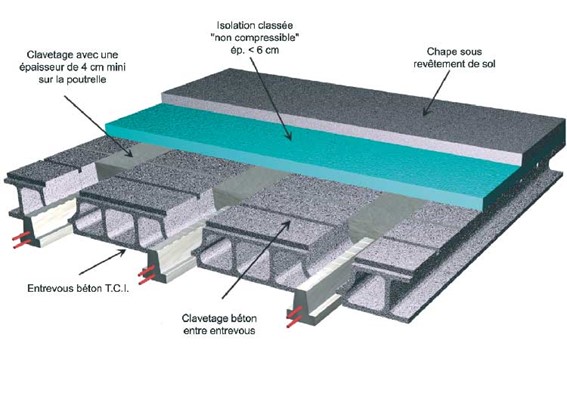
This system is widely used for floor slabs throughout France and Germany and is extensively used throughout French speaking Africa.
The factory uses German moulding equipment and the German owner has a similar factory in Germany. The company is called CV Wilhelm Green Stone and PT ForSS has been a customer since 2015.
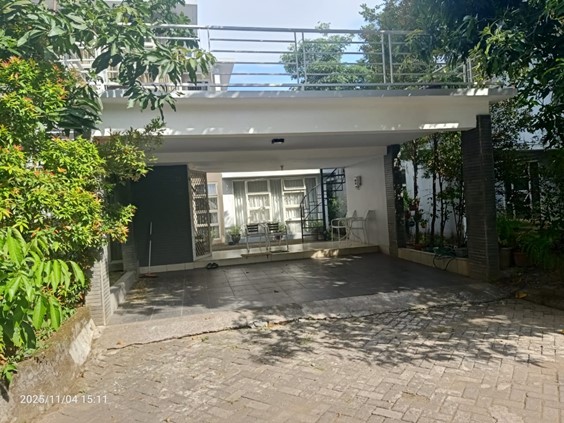
PT ForSS acts as a contractor for small-scale projects such as car-ports with terraces, where the ‘batu apung’ option for the terrace slab is very competitive compared with the conventional reinforced concrete (RC) option. This option was used for the car-port/terrace of the PT ForSS Office, as shown below.
“Hebel”, also known as light-weight bricks, are a popular building material in Indonesia, primarily used for construction due to their light weight and ease of manual handling.
- Advantages: Hebel bricks are lightweight, making installation easier and reducing labour costs. They also provide good insulation against heat and sound, making them suitable for tropical climates.
- Applications: Hebel are commonly used in multi-story buildings and are known for their fire-resistant qualities, which help slow down the spread of fire.
- Company: The concept of Hebel was introduced by PT Hebel Indonesia, which operated from 1995 to 2015, and the name is associated with this innovative material.
Overall, “Hebel” is a versatile and efficient building material that has gained popularity in Indonesia for its practicality and cost-effectiveness. When made using pumice stone as aggregate, the cost savings are even greater. The components for constructing deck slabs are as follows:
FILLERS (HOURDIS) & GIRDERS
https://www.spbprecastconcrete.com/combined-h-p
Fillers (Hourdis)
“Fillers”, also called “hourdis”, are precast elements used to create floors slabs in two-storey or multi-storey buildings. When made with pumice stone, they are very light and therefore movable by hand and fast to assemble. Slabs made with such light-weight elements can resist live loads of up to 500 kg per square metre, which covers the vast majority of usage situations.
Mini-girders
RC girders or mini-beams are easy and fast to assemble, and are also movable by hand. They are made of steel rebar 500 MPA, and concrete with additive. The usual length is up to 6.50 metres.
The combination of both hourdis and mini-girders girders provide a very strong frame on which is laid a welded steel mesh of FE-500 MPA, on top of which is poured a concrete compression slab (5 cm thickness) able to withstand a live load up to 500 kg per square metre.
This system obviates the need of traditional formwork, ensuring substantial time and cost gains. It also considerably reduces the use of props, which enables further work to be done under the slab without waiting for a month for the concrete to harden.
Objective of PT ForSS
Through its other activities, PT ForSS wishes to promote the use of these materials, as this will:
- provide benefits to the owners of buildings constructed with these products;
- make good use of a natural resource that Indonesia has in abundance (in Lombok); and
- be good for the environment, as buildings constructed with these materials will consume much less steel and cement than conventional RC buildings